- EN
- NL
 News
News
Rapport: Paniek en slaapgebrek door tijdelijke contracten in wetenschap
Tijdelijke contracten met slechte voorwaarden aan de universiteit maken het werk voor onderzoekers en docenten erg zwaar. Dat is de rode lijn in een rapport met persoonlijke verhalen.
- EN
- NL
News
Report: Panic and lack of sleep because of temporary contracts in the academic world
Temporary university contracts with poor terms and conditions make the work of researchers and teaching staff very difficult. That is the main theme in a report containing personal stories.
- EN
- NL
 News
News
Medezeggenschap wil uit neerwaartse spiraal
De politiek laat de medezeggenschap aan haar lot over, vindt Rien Wijnhoven van LOVUM, de vereniging van universiteitsraden. Woensdag opent hij een congres over de toekomst van de medezeggenschap in het hoger onderwijs.
- EN
- NL
News
Participation bodies want to get out of downward spiral
Politicians are abandoning employee/student participation to its fate, in the view of Rien Wijnhoven of LOVUM, the association of university participation bodies. On Wednesday, he opens a congress on the future of participation bodies in higher education.
- EN
- NL
 News
News
UT verwacht fors tekort dit jaar
De UT verwacht dit jaar fors rodere cijfers te schrijven dan begroot: een tekort van zo’n 13 miljoen euro. Voornaamste oorzaken zijn de gestegen energieprijzen, de tegenvallende instroom en het nog niet volledig besteden van de miljoenen uit het Nationaal Programma Onderwijs.
- EN
- NL
News
UT expects sizeable deficit this year
The UT expects to post substantially redder figures than budgeted this year: a deficit of some 13 million euros. Main causes are increased energy prices, lower enrolment numbers and the incomplete spending of millions from the National Education Programme.
- EN
- NL
 News
News
Onderwijsraad wil landelijk examen taal en rekenen bij lerarenopleidingen hbo
Het taal- en rekenniveau van Nederlandse leerlingen is alarmerend laag. Maar hoe zit het dan met hun docenten? De Onderwijsraad bepleit landelijke toetsen voor studenten van pabo’s en tweedegraadslerarenopleidingen Nederlands en wiskunde.
- EN
- NL
News
Education Council: national exam in language and arithmetic in teacher training programmes
The level of language and arithmetic among Dutch schoolchildren is alarmingly low. But how about their teachers? The Education Council advocates national tests for students at teacher training colleges and in secondary education teacher training programmes in Dutch and mathematics.

- EN
- NL
 News
News
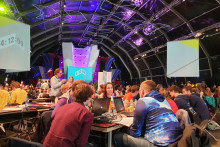
Create Tomorrow keert terug na drie jaar fysieke afwezigheid
Create Tomorrow is in het voorjaar van 2023 terug van weggeweest. De studentendenktank stond na drie jaar van fysieke afwezigheid en een gebrek aan nieuwe bestuurders op losse schroeven. Peter Dieleman (20), student technische geneeskunde, pakte de handschoen op en hoopt oude tijden te doen herleven.
- EN
- NL
News
Create Tomorrow returns after three years of physical absence
Create Tomorrow will return in the spring of 2023. The student think tank was in jeopardy after three years of physical absence and a lack of new committee members. Peter Dieleman (20), a technical medicine student, rises up to the challenge and hopes to revive old times.